
How I Trade Gamma Exposure (GEX): Lessons From the 2021 Squeezes to Today
2026-11-10
Written by the founder of Obelion. I've been trading for 11 years: nine in the options market and two in forex before that.
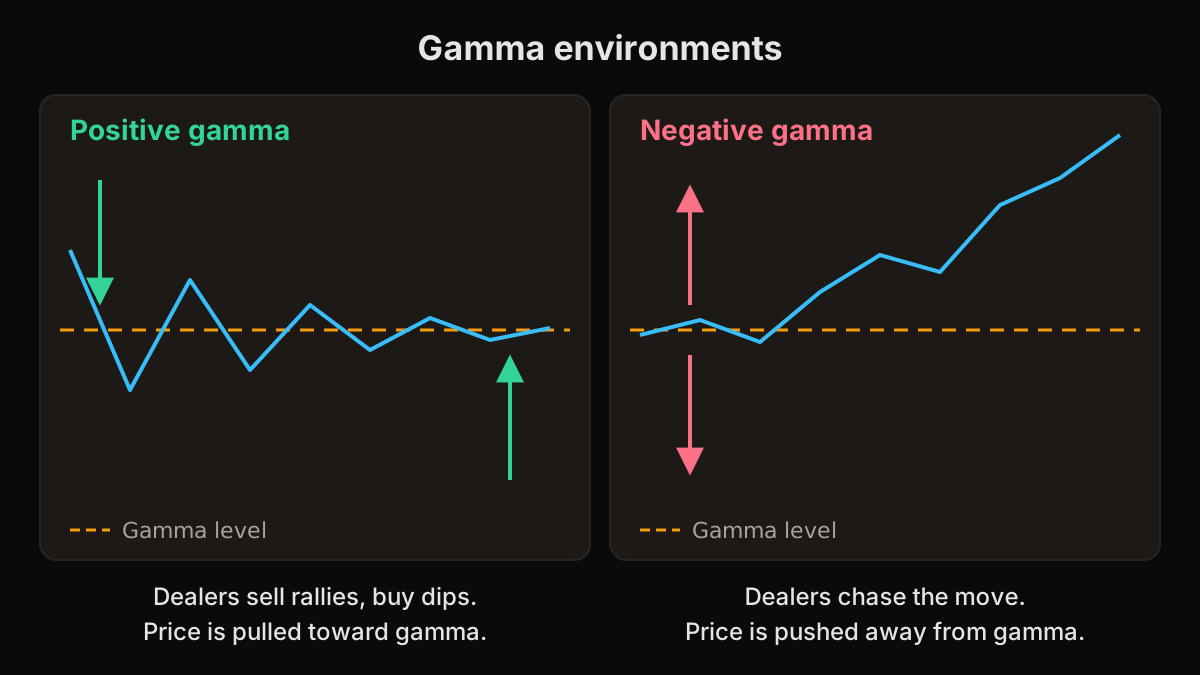
Gamma exposure (GEX) is an estimate of how much stock options dealers have to buy or sell to stay hedged as price moves. In a positive gamma environment their hedging tends to pull price back toward the big gamma levels. In a negative gamma environment it tends to push price away from them. GEX trading means reading which of those two regimes you're in, and using the levels as a map for where price is likely to stall or run.
How gamma clicked for me
I started watching gamma exposure in 2021, before it was something everyone talked about. It was the AMC and GameStop short squeezes. I could watch a gamma squeeze happen live: volatility pushed options into the money, dealers in a negative gamma environment had to chase the move, and the squeeze fed itself.
What stayed with me was the other side of it. On some days during those squeezes AMC didn't run to new highs. It pulled back to the gamma level, because the environment had turned positive. Once I saw both sides, I knew there was a real opportunity in gamma, and I built it into my trading.
What dealer gamma exposure actually measures
When a customer buys an option, a dealer usually takes the other side and hedges it with stock. Gamma tells the dealer how fast that hedge goes stale as price moves. Add up gamma across every strike, weight it by open interest, and you get a picture of where dealer hedging will be heaviest.
Two things matter more than the raw number:
- The environment. Positive total gamma means dealers sell rallies and buy dips, which calms price down. Negative total gamma means they buy rallies and sell dips, which makes moves bigger.
- Where gamma is concentrated. The strikes with the most gamma act like gravity in positive gamma, and like a launch point in negative gamma. The price where total gamma changes sign is the gamma flip.
The full math, including how we count calls and puts and why the figure is in dollars per 1% move, is on our methodology page. If you want the slow walk-through from the beginning, the GEX and dealer positioning course covers it chapter by chapter.
A real trade: Tesla, November 4 and 5
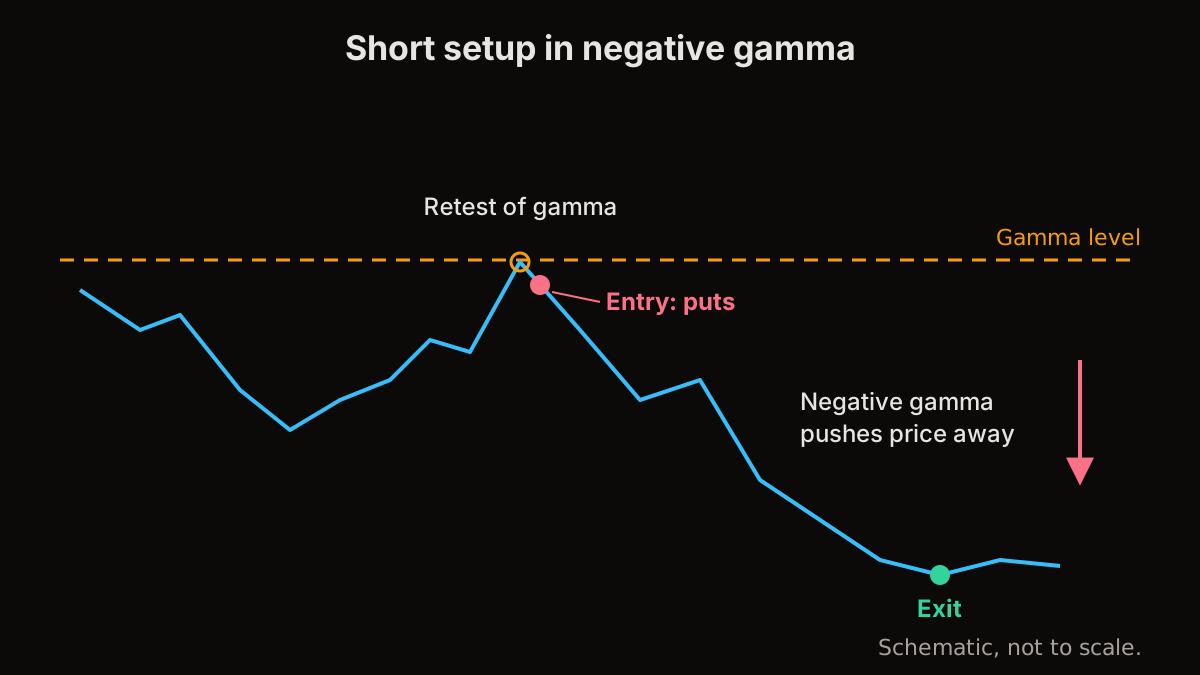
Going into that week, TSLA was in a negative gamma environment, and the spot price was sitting below the gamma level. On Wednesday, November 4, price rallied back up to that level. We shorted it close to the top and opened our main put position at 390.
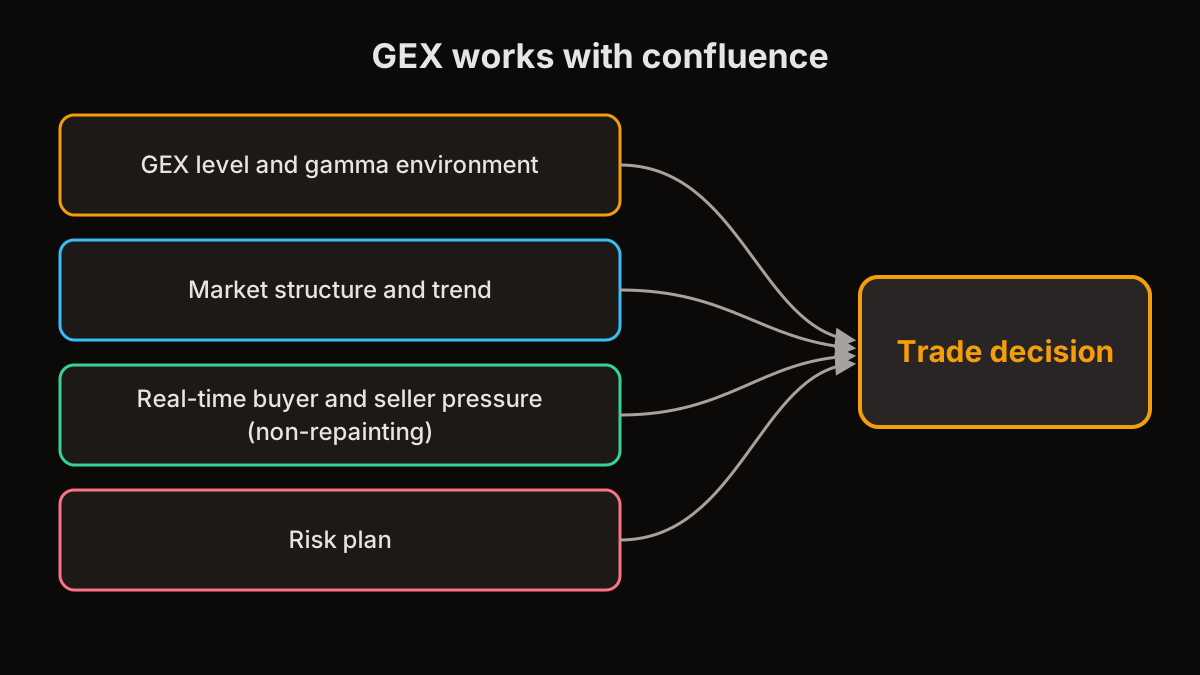
Three things lined up. The gamma environment was negative, the trend was down, and our own algorithm pointed to a move lower. In negative gamma, price tends to get pushed away from where gamma is concentrated, so a rejection at that level had room to run.
On Thursday, November 5, the whole market sold off. QQQ closed down about 6.5%, and TSLA fell as much as 12% intraday, from a 385 close the day before to a low near 338. We took profits that day at 345. Everything we used for that trade was on the Obelion Terminal.
This is our trade, shared to show how we read GEX. It isn't advice, and past results don't predict future ones. Options can lose their full value quickly.
Is GEX support and resistance?
Nothing in trading is magic, and GEX on its own will fail you. You need confluence. For me that comes from real-time algorithms that don't repaint, like RV Explosion on our Obelisk tier. It shows buyers and sellers stepping in or backing off in a simple form, without the clutter of reading raw footprint data.
Pair that with the fundamentals, market structure and trend, and GEX becomes something you can test. You'll have a better idea whether a level will hold. You'll also know which way the environment pulls: in positive gamma price tends to move toward the gamma level, and in negative gamma it tends to move away from it.
Why we built our own GEX tools
We built our own GEX tools because we wanted readings that were consistent and free. Once you sign up, every GEX tool on Obelion is free. A lot of sites hold back the useful parts to pull you into a subscription, and we'd rather give people something real for free. We also show GEX differently: our heatmaps and comparison maps go into detail most tools skip.
For the plain explainer, see what is GEX trading. If you're comparing options, our gamma exposure tools comparison lays out what each platform charges and shows.
Questions people ask about GEX trading
What is GEX in options trading?
GEX, or gamma exposure, is the estimated amount of stock options dealers must trade to stay hedged for each 1% move in the underlying. It's built from open interest and gamma at every strike.
What is a negative gamma environment?
It's when estimated total dealer gamma is below zero. Dealers hedge in the same direction as the move, so selloffs and rallies tend to stretch further than usual.
Does price always go back to the gamma level?
No. That pull mostly shows up in positive gamma. In negative gamma, price is more likely to move away from the level, which is why knowing the environment comes first.
Which tickers is GEX most useful on?
The ones with deep options markets, like SPX, SPY, QQQ and the most traded single names. You can see the current reading for SPY, QQQ and TSLA for free.
Can I practice reading GEX without risking money?
Yes. The Arena lets you trade historical markets against other players with game money, so you can test how you read levels before it costs anything.
Open the live GEX dashboard to see the gamma flip, call wall and put wall for any ticker.
Not financial advice. Disclaimer